Emergency Dental Care for Knocked-Out Teeth
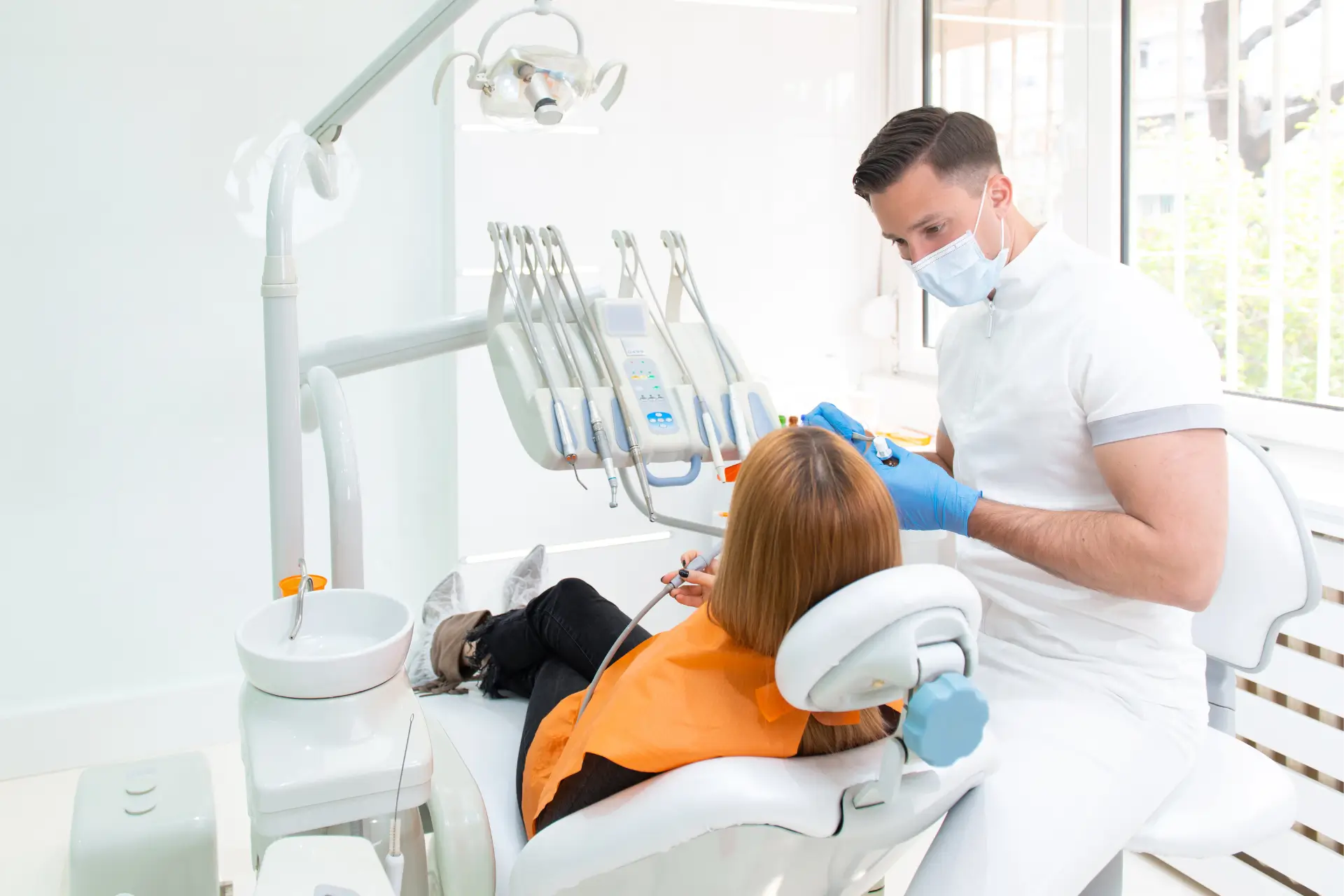
A knocked-out tooth is one of the few true time-sensitive events in dentistry. There is pain, blood, panic, and usually a lot of bad advice from well-meaning people nearby. What matters most in the first few minutes is not a perfect diagnosis. It is keeping the tooth alive long enough for a dentist to place it back into the socket.
When a permanent tooth is completely displaced from the mouth, the technical term is avulsion. It can happen in a football collision, a bike fall, a playground accident, a slip on wet tile, or an elbow during a weekend basketball game. I have seen all of those scenarios, and the same pattern repeats. The people who do best are rarely the ones who stay calm naturally. They are the ones who know exactly what to do next.
That is the point of emergency dental care in this situation. A knocked-out tooth can sometimes be saved, but the window is short, and handling matters.
The first few minutes decide a lot
A healthy tooth is not just a hard white structure. Its root surface is covered by delicate periodontal ligament cells. Those cells help the tooth reconnect to the bone after replantation. Once the tooth dries out, those cells begin to die. That does not mean every dry tooth is hopeless, but it does mean every minute outside the mouth counts.
The ideal scenario is simple. The tooth is found quickly, picked up by the crown rather than the root, gently rinsed if dirty, and placed back into the socket right away, or stored in an appropriate liquid until a dentist can replant it. When that happens within 30 minutes, the odds of long-term survival are significantly better. After 60 minutes of dry time, the prognosis becomes much more guarded. Dentists can still often do something useful, but expectations need to be realistic.
This is one reason a knocked-out tooth sits in a different category from a chipped tooth or a lost filling. Those can usually wait a bit. An avulsed permanent tooth should be treated like a dental emergency.
What to do immediately
If the tooth is a permanent tooth, the response should be quick and deliberate:
- Find the tooth and pick it up by the crown, which is the part normally visible in the mouth. Do not touch or scrub the root.
- If it is dirty, rinse it gently for a few seconds with milk, saline, or clean water. Do not use soap, disinfectant, or vigorous running water.
- If possible, place the tooth back into the socket in the correct orientation and have the person bite gently on clean gauze or cloth to hold it there.
- If replanting is not possible, keep the tooth moist in cold milk, saline, or inside the cheek of an older cooperative patient who will not swallow it.
- Get to a dentist or emergency dental clinic immediately, ideally within 30 minutes.
Those five steps sound straightforward on paper. In real life, people often freeze on step one because the tooth looks shocking. Blood can make it hard to tell whether the tooth is intact, and the root looks unfamiliar. That is why the rule about touching only the crown matters so much. Even if you are unsure, you are less likely to damage the critical root surface if you hold the tooth the way it naturally sits in the mouth.
The detail people miss, permanent tooth or baby tooth?
This is the most important distinction a parent can make.
A knocked-out baby tooth should not be replanted. Putting a primary tooth back in can injure the developing permanent tooth underneath. The child still needs prompt dental evaluation, especially if there is bleeding, pain, or concern about broken bone, but the treatment plan is different.
A knocked-out permanent tooth, on the other hand, is the one dentists try to save by replantation when appropriate.
Children around six to seven years old are in the mixed dentition stage, which means some teeth are baby teeth and some are permanent. Front permanent incisors often erupt around age six to eight, so age alone is not enough to decide. If there is any uncertainty, call a dentist while heading in. Sending a photo can help the office advise you quickly.
Why milk is often recommended
Patients are sometimes surprised that milk is a standard recommendation in a dental emergency. It is not a folk remedy. It is practical. Milk is widely available, has a reasonable pH, and helps preserve periodontal ligament cells better than leaving the tooth dry. Saline is also a good choice. Specialized tooth preservation kits exist and work well, but most people do not have one in a kitchen drawer or first aid bag.
Plain water is better than dry tissue or a pocket, but it is not ideal for storage because it can harm cells over time through osmotic effects. That said, a short gentle rinse to remove visible dirt is acceptable when there is no better option. What matters most is not perfection. It is minimizing dry time and avoiding damage to the root.
I have seen teeth arrive wrapped in napkins, tucked into a wallet, and once in a child’s mitten. Those are memorable, but not in a good way. Dry storage is the mistake that most often compromises an otherwise salvageable tooth.
What not to do
In the scramble to help, these common mistakes make things worse:
- Do not scrub the root with a toothbrush, tissue, or shirt sleeve.
- Do not let the tooth dry out on a counter, in a pocket, or in a paper towel.
- Do not store it in ice water, alcohol, or mouthwash.
- Do not force a baby tooth back into the socket.
- Do not delay care to “see if it settles down.”
One nuance deserves mention. People sometimes worry about “cleaning it properly” before replanting. That instinct is understandable after a fall onto pavement or a gym floor. But aggressive cleaning usually causes more harm than the dirt itself. A brief gentle rinse is enough. Dentists can manage contamination far better than they can reverse root surface injury caused by scrubbing.
If you try to put the tooth back in
Immediate replantation at the scene is often the best option for a permanent tooth, provided the patient is awake, cooperative, and not at risk of inhaling the tooth. It sounds intimidating, but it is often easier than people expect. The crown shape helps orient it. The socket will usually guide the root in if the tooth is lined up correctly. It should seat with gentle pressure, not force.
If it does not go in easily, stop. Do not twist it around or jam it into place. Store it properly and go straight to the dentist. A clot, soft tissue folding, or socket fracture may be interfering, and those problems need clinical evaluation.
An anxious teenager on a sports sideline may tolerate immediate replantation surprisingly well. A frightened five-year-old with active crying and bleeding may not. Judgment matters. The goal is not heroics. The goal is preserving the best chance of a favorable outcome.
What the dentist does on arrival
People often assume the dentist simply “sticks the tooth back in.” The actual process is more controlled than that.
The first step is to confirm what happened, when it happened, how the tooth was stored, and whether there are other injuries. Facial trauma can include lip lacerations, alveolar bone fractures, jaw injury, and concussion. A missing tooth also raises the question of aspiration or swallowing, especially in chaotic accidents.
The dentist will examine the socket, assess neighboring teeth for mobility or fractures, and take radiographs. If the tooth has not already been replanted, it is typically rinsed, repositioned into the socket, and stabilized with a flexible splint attached to adjacent teeth. That splint often stays in place for about two weeks, although timing can vary depending on associated injuries.
The tooth’s long-term vitality depends on root development and Dental Emergency extraoral time. In a mature tooth with a closed apex, root canal treatment is commonly needed after replantation because the pulp usually does not recover. In an immature tooth with an open apex, there is a better chance, though not a guarantee, of revascularization. This is why children and adolescents with newly erupted permanent incisors deserve especially careful follow-up.
Tetanus status may also come up if the injury involved dirt contamination. Antibiotics are sometimes prescribed, depending on the case and the clinician’s judgment.
Pain, bleeding, and what is normal
A knocked-out tooth bleeds because the socket is a living tissue space. Mild to moderate bleeding is common and usually slows with firm pressure using gauze or a clean cloth. Oozing for several hours can happen, especially after replantation or splinting. Heavy uncontrolled bleeding is different and warrants urgent assessment.
Pain is expected, but it varies. Some patients are in acute distress. Others report more shock than pain, particularly right after the injury. Over-the-counter pain relief may be reasonable if medically appropriate, but that should not delay treatment. Ice applied externally to the lip or cheek can help with swelling.
What worries dentists more than bleeding alone is the pattern of the injury. If several teeth feel “off,” the bite suddenly does not fit together, or the gumline looks uneven, there may be a bone fracture rather than a simple avulsion. Those cases can still be managed, but they need timely and sometimes more complex care.
Sports injuries, school accidents, and household falls
Different settings create different problems.
Sports injuries often involve fast decisions in noisy environments. Coaches may not know whether the tooth is permanent. The tooth may be left on the field while everyone checks for a head injury. A good team first aid plan helps enormously. A small container and saline in a sports bag is not excessive preparation. It is sensible.
At school, the challenge is communication. Front office staff may be trying to reach parents while also responding to a crying child. Teachers may not be trained in dental emergency handling. If your child has erupted permanent front teeth and plays actively, it is worth discussing with the school nurse or staff how dental trauma is typically handled.
Household falls create another set of issues. Slippery bathrooms, stairs, coffee tables, and kitchen floors are repeat offenders. In those situations, people sometimes delay because they are not sure whether the tooth is fully out or only displaced. A tooth that looks longer than the others, pushed backward, or hanging loosely also needs urgent dental care even if it has not left the mouth completely.
The long game after the tooth is saved
Even when the tooth is successfully replanted, the story is not over. This is where expectations need to be honest.
The best-case outcome is stable healing with acceptable function and appearance for many years. That does happen. Still, avulsed teeth carry risks. Root resorption, ankylosis, infection, pulpal necrosis, and loss of supporting bone are all possible. Some of these complications show up weeks later, others months or years later.
A teenager who loses a front tooth in a soccer match may keep that tooth for a long time after prompt treatment, but still need future intervention. In younger patients, ankylosis can be especially problematic because the tooth becomes fused to bone and does not move with facial growth. Over time it may appear to sink relative to adjacent teeth. In adults, the same issue can be more manageable from an esthetic standpoint, but it is still not ideal.
For that reason, follow-up visits are part of proper emergency dental care, not an optional extra. The dentist will monitor mobility, percussion sound, radiographic changes, and signs of infection or resorption. Missing those reviews can turn a manageable complication into a more significant problem.
What if the tooth cannot be saved?
Sometimes the tooth is not recoverable. It may have been lost at the scene, crushed, contaminated beyond practical replantation, or left dry too long. Even then, urgent dental care still matters.
The dentist can clean and protect the site, check for bone injury, and plan the next step. In children and adolescents, management may involve a temporary solution while growth continues. In adults, options may later include a bridge, implant, or removable prosthesis, depending on bone support, age, overall dental health, and budget.
This is where experience matters. Replacing a front tooth is not only about filling a gap. It is about preserving bone and soft tissue contours, matching adjacent teeth, and timing treatment appropriately. An emergency visit can set up those future choices well, or poorly, depending on how the initial injury is handled.
A few edge cases worth knowing
Sometimes the entire tooth is not avulsed, but a root fracture makes the crown segment mobile or detached. Sometimes a tooth is intruded, driven up into the bone, which can look at first glance like it has been knocked out. Sometimes the “missing” tooth is embedded in the lip after trauma. These are all reasons not to rely on visual guesswork alone.
Another point that catches families off guard is contamination from pools, dirt, asphalt, or animal contact during the accident. These details matter medically, especially for wound care and tetanus risk. Mention them clearly when you arrive.
Orthodontic history can matter too. Teeth recently moved with braces may have slightly different mobility characteristics, and retainers or wires can complicate trauma patterns. None of this changes the need for speed, but it helps the treating clinician understand the situation.
Prevention is less glamorous, but it works
The easiest knocked-out tooth to treat is the one that never gets avulsed. Mouthguards make a real difference in contact sports and in activities where falls are common, such as skateboarding, mountain biking, and martial arts. Custom-fitted guards generally protect better and feel better than boil-and-bite versions, though even an over-the-counter guard is usually better than none.
At home, prevention is more ordinary. Good stair lighting, non-slip bath mats, clutter-free play areas, and supervision during high-risk play reduce the odds of facial trauma. For toddlers, coffee table corners and hard flooring are frequent contributors. For adults, Dental Emergency alcohol, rushing, and wet surfaces are a familiar combination in after-hours injuries.
The takeaway that matters under stress
When a permanent tooth is knocked out, every minute matters, but panic is not helpful. Handle the tooth by the crown, keep the root moist, replant it if it is safe and feasible, and get to a dentist immediately. If it is a baby tooth, do not put it back in.
People often remember only one piece of advice after a stressful event. If that is the case, remember this one: a knocked-out permanent tooth should never be allowed to dry out. That single detail has changed outcomes more times than most patients realize.
Dental trauma is messy and frightening, especially when blood and front teeth are involved. Still, timely, informed action gives the tooth its best chance. In a true dental emergency, simple steps taken well beat complicated steps taken too late.
Vitality Dental
Address: 1220 Coit Rd #106, Plano, TX 75075
Phone number: +19726454100
FAQ About Dental Emergency
What can the ER do for a tooth?
An emergency room (ER) can manage pain and treat severe infections with medication, but it cannot fix or pull a tooth.
What is considered a dental emergency?
A dental emergency is any oral health problem that involves severe pain, uncontrollable bleeding, or an infection that threatens your health or requires immediate care to save a tooth.
Is there a 24-hour dental service in Plano, TX?
There is no physical dental clinic in Plano, Texas, that stays open with walk-in staff 24 hours a day, but several offices offer 24/7 phone support, late-night hours, or same-day emergency care.